
EXOGENOUS CARBOHYDRATE OXIDATION TEST
Our advanced metabolic analysis uses carbon-13 tracing technology to determine exactly how much of the carbohydrate you consume during training is actually being oxidised for energy — giving you personalised, precision fuelling targets backed by elite-level science.
Why Take the Exogenous Carbohydrate Oxidation Test?
1. Find Your True Carbohydrate Oxidation Ceiling
Most athletes rely on generic guidelines like 60–90g/hr, but real-world variation is enormous. Research shows some athletes oxidise over 110g/hr, while others struggle to process 70g/hr, even when consuming more. This test reveals your ceiling — so you can fuel at the highest level you can tolerate.
2. Avoid GI Distress and Race-Day Disasters
Unused carbohydrate sits in your gut, leading to:
- bloating
- nausea
- stomach cramps
- diarrhoea
- reduced performance
With personalised oxidation data, you eliminate guesswork and fuel confidently.
3. Precision Fuel Planning for Every Session
Know exactly:
- how many grams of carbohydrate you can oxidise per hour
- how to adjust for intensity, terrain, and duration
- how much fuel to carry (no excess weight)
- which products best match your physiology
4. Elite-Level Insights for All Athletes
This method — formerly only available to pro cycling and marathon teams — is now accessible to motivated amateur athletes. Examples from elite case studies show oxidative efficiency between 60–94% depending on athlete and protocol.
Who Should Take a Sweat Composition Test?
Runners & Marathoners
Especially if you’ve struggled with GI issues, late-race fatigue, or difficulty holding pace in the final third of an event. Elite marathoners in case studies consumed 77–96 g/hr with efficiency ranging from 60–75%.
Cyclists & Gravel/Road Racers
Cyclists often consume the highest carbohydrate loads (up to 120g/hr). Without testing, over- or under-fuelling is likely.
Triathletes
Triathlon involves complex bike-to-run fuelling demands; individual differences here can be significant.
Ultra-Endurance Athletes
Ultra runners and long-distance riders benefit from knowing exactly when carbohydrates vs fats contribute to performance.
Athletes with GI Symptoms During Training or Racing
This is the strongest predictor someone will benefit from testing.
Test Protocol
Pre-Test Preparation
You’ll receive clear instructions, including foods to avoid before testing due to naturally high ¹³C levels (to prevent skewed readings).
Baseline Breath Sample
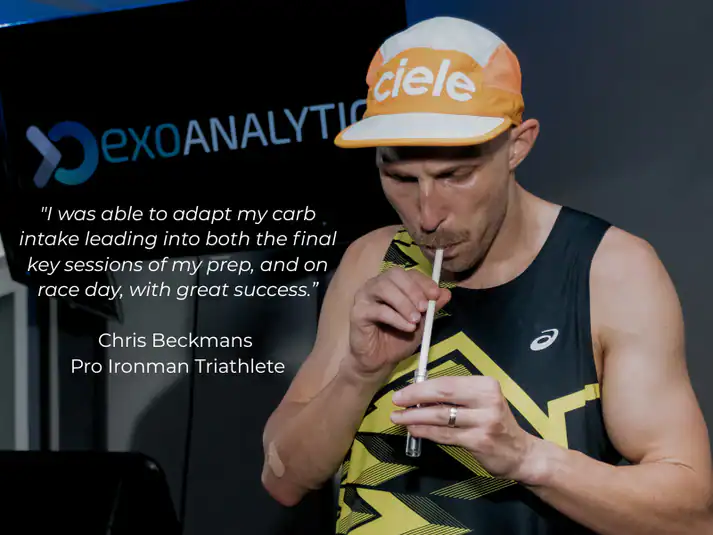
You provide a baseline breath sample into a collection vial to determine your natural carbon-13 composition.
Standardised CHO Intake During Exercise
You consume a controlled amount of carbohydrate drink enriched with naturally occurring carbon-13.
Common protocol:
- 90 minutes of steady-state exercise at ~70% threshold
- 90–120g/hr carbohydrate intake depending on body size & sport
Steady-State Exercise Phase
You train at a consistent intensity (treadmill, bike, or turbo). This intensity is chosen because it represents:
- peak carbohydrate utilisation
- stable oxidation kinetic
Final Breath Sample + Indirect Calorimetry
The final 8–10 minutes are done wearing a metabolic mask to measure whole-body carbohydrate and fat oxidation.
Laboratory Analysis
Your breath samples are analysed for carbon-13 enrichment, which tells us exactly how many grams per hour of the drink you oxidised.
Personalised Report
Your report includes:
- your maximal exogenous carbohydrate oxidation rate
- your oxidation efficiency (%)
- personalised carbohydrate targets for different durations
- environmental considerations (e.g., heat reduces oxidation by 10–25%)
- insight to help you select the best products that suit your requirements
FAQ
How is this different from a VO₂ Max test?
VO₂ Max tests measure aerobic capacity. This test measures how well your gut and muscles utilise ingested carbohydrate — something VO₂ cannot measure.
Is carbon-13 safe?
Yes. Carbon-13 is a naturally occurring, stable isotope found in normal foods. It is non-radioactive and widely used in metabolic research.
Can this test help with GI issues?
Absolutely. GI symptoms often occur because athletes exceed their oxidation ceiling. Your personalised ceiling prevents this.
Will training improve my oxidation rate?
In many athletes, yes. Gut training and substrate-use training can improve carbohydrate utilisation.
Do cyclists and runners differ?
Yes. Cycling often permits higher intake and oxidation rates, but individuals vary significantly.
How long does the test take?
Approximately 90 minutes of exercise + preparation time.
Can I do this test on my own bike?
Yes — turbo trainer, treadmill, Wattbike, or outdoor smart-trainer setup.

Race Day Fueling & Hydration Blue Print
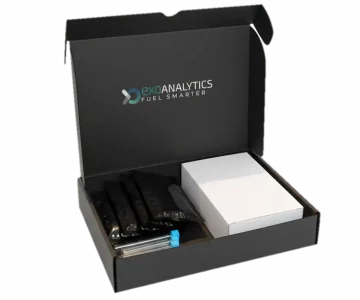
A complete fueling and hydration assessment combining sweat composition and sweat rate loss testing. This profile shows how much sodium you lose, how quickly you dehydrate, and what you need to drink to stay strong throughout training and racing. Your personalised plan helps maintain power, prevent cramps, and avoid performance decline on hot or intense sessions.